Disasterville
Mixed-reality disaster response you can put in a high school gym.
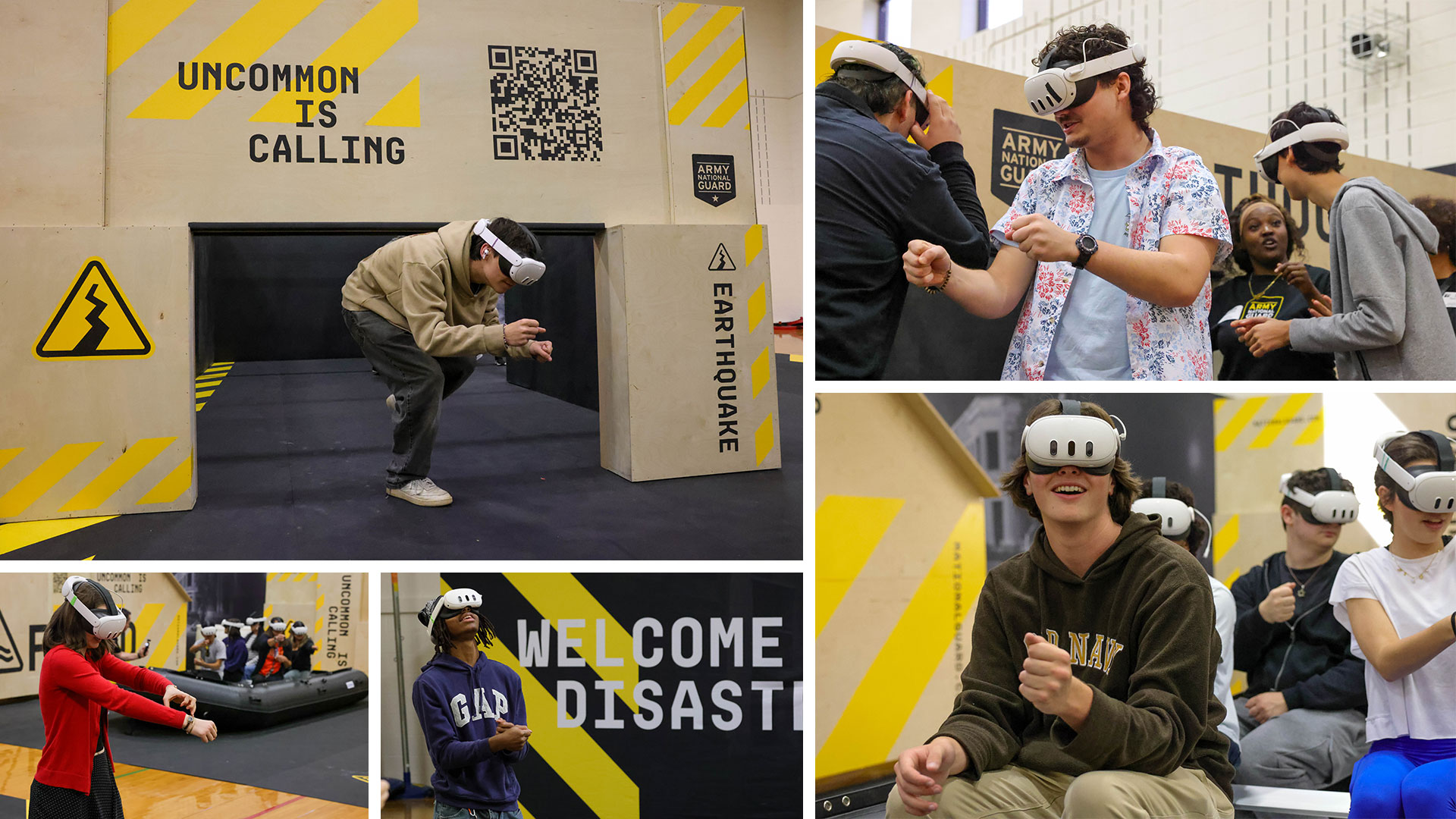
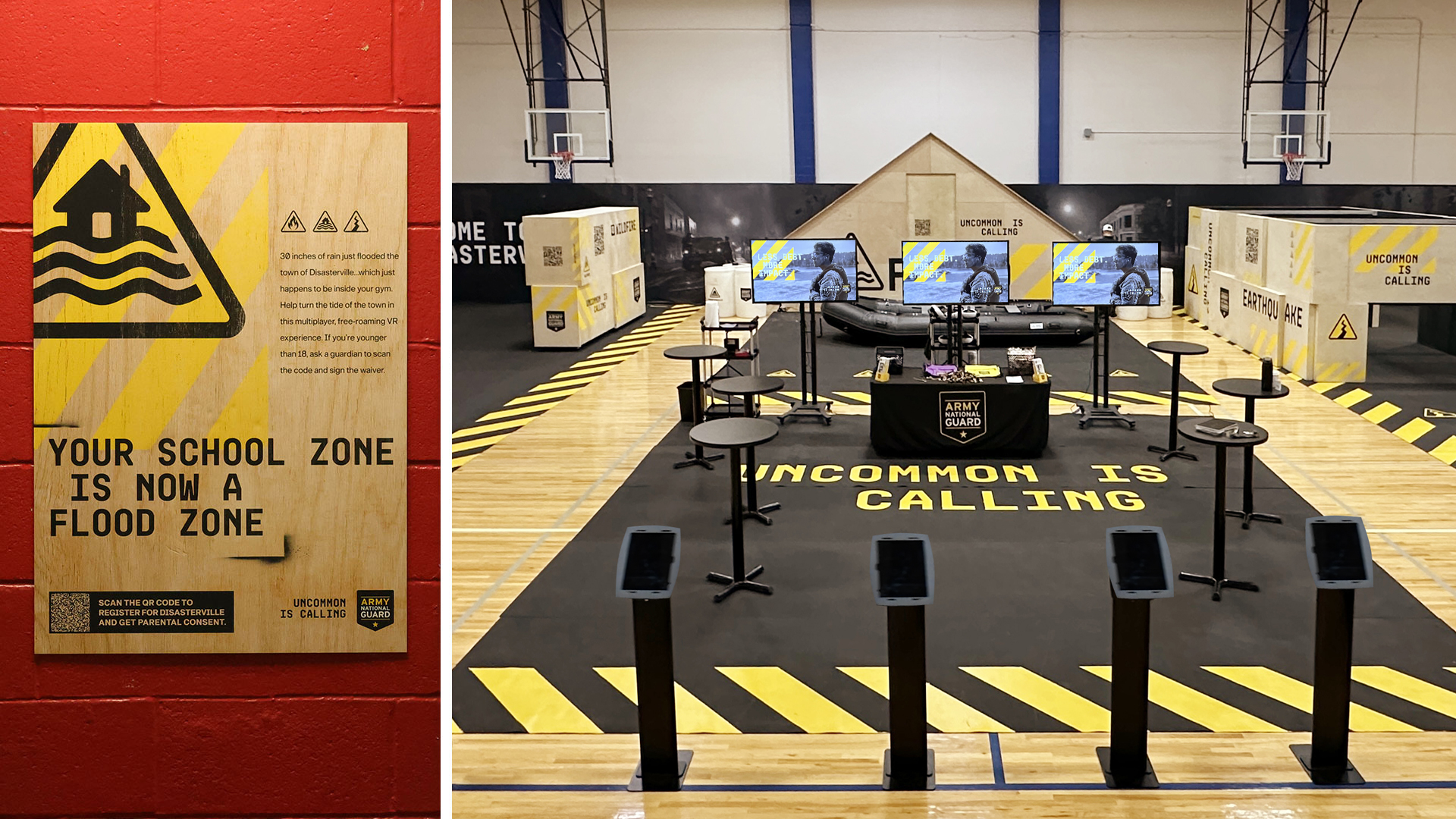
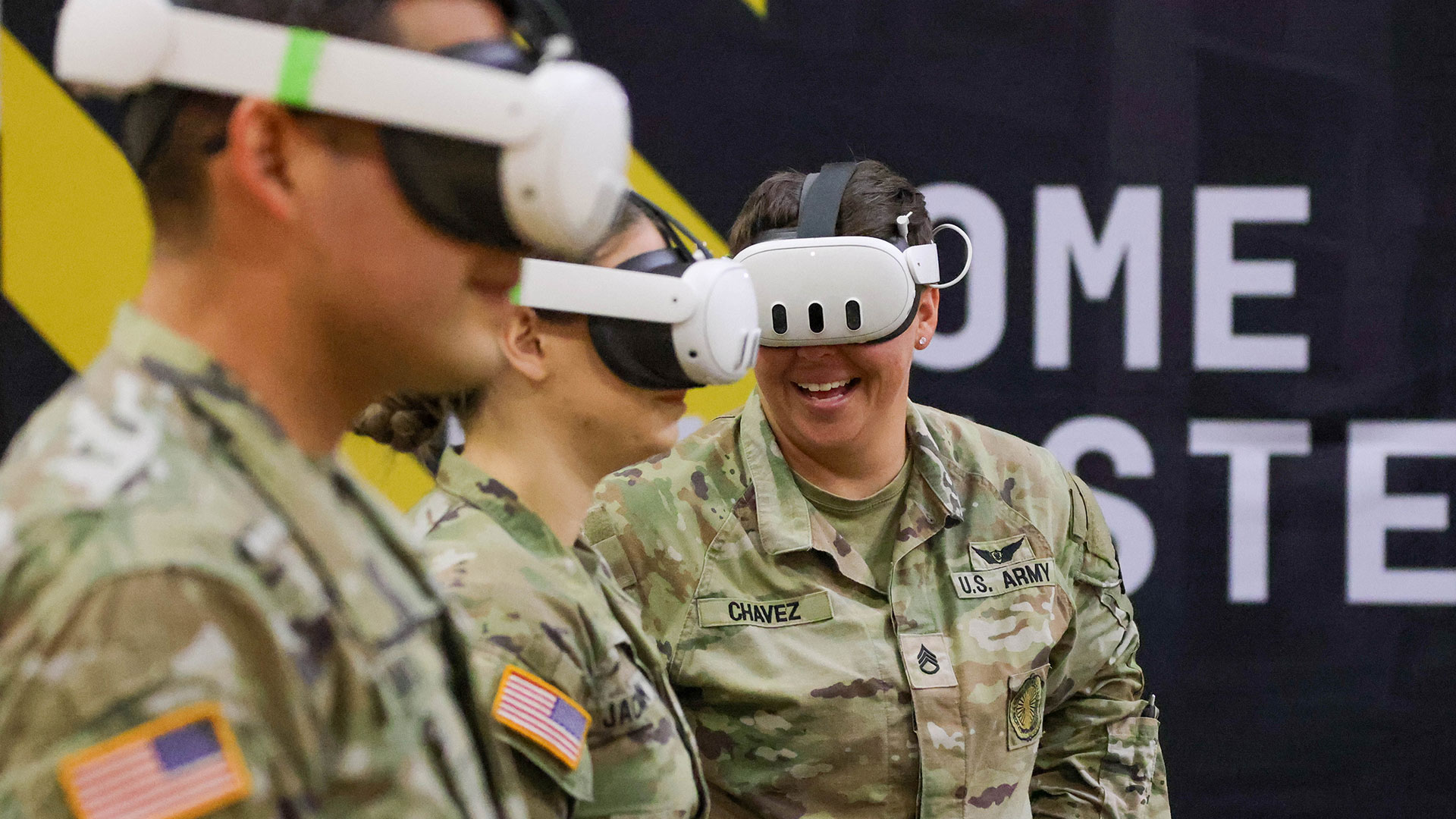
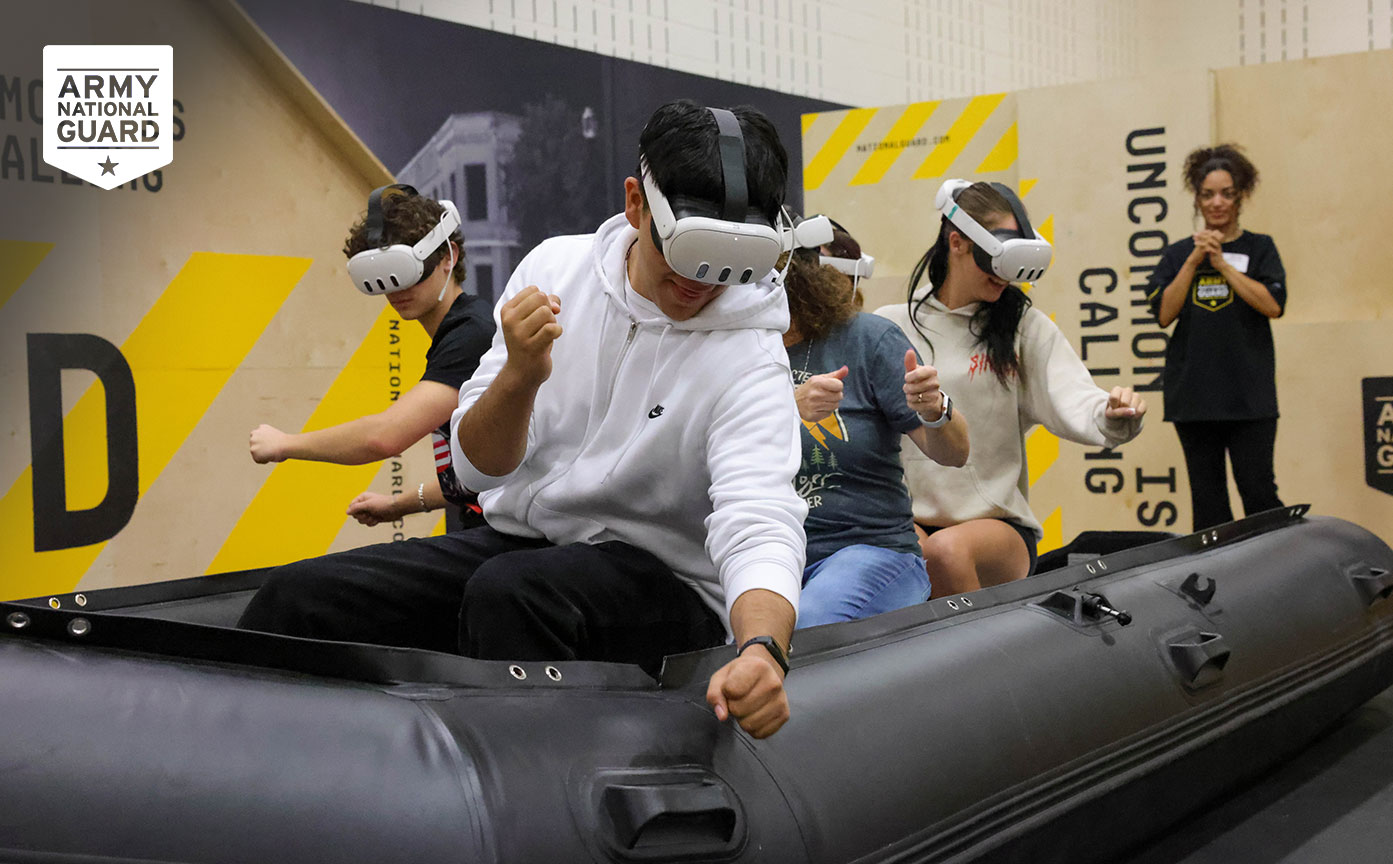
Disasterville turns a gym into a disaster zone. Students wear Quest 3 headsets, work as a five-person team, and use real props — oars, hoses, a jaws-of-life, a zodiac — inside flood, fire, and earthquake missions. No controllers. Hand tracking. Built to tour schools, not a theme park.
Groove Jones built the experience with Team DDB and TMA for the Army National Guard. The public story is recruitment and empathy. The production story is a lot of characters, vehicles, and cinematic gameplay moments that have to run on a headset in a room that is also a basketball court.
What I did
I worked across all three missions as a technical artist and animator.
I built and prepared survivor characters: meshes, textures, atlases, rigs, blendshapes, Mixamo-compatible setups. Some started as AI-assisted turnarounds and image-to-3D tests; all of them needed manual rigging, skinning, and texture work before Unity would take them. Flood got a curated survivor set on a single-material atlas, plus named characters — flood dad, the little girl, Diaz — with the face shapes Tiffany later used for mocap.
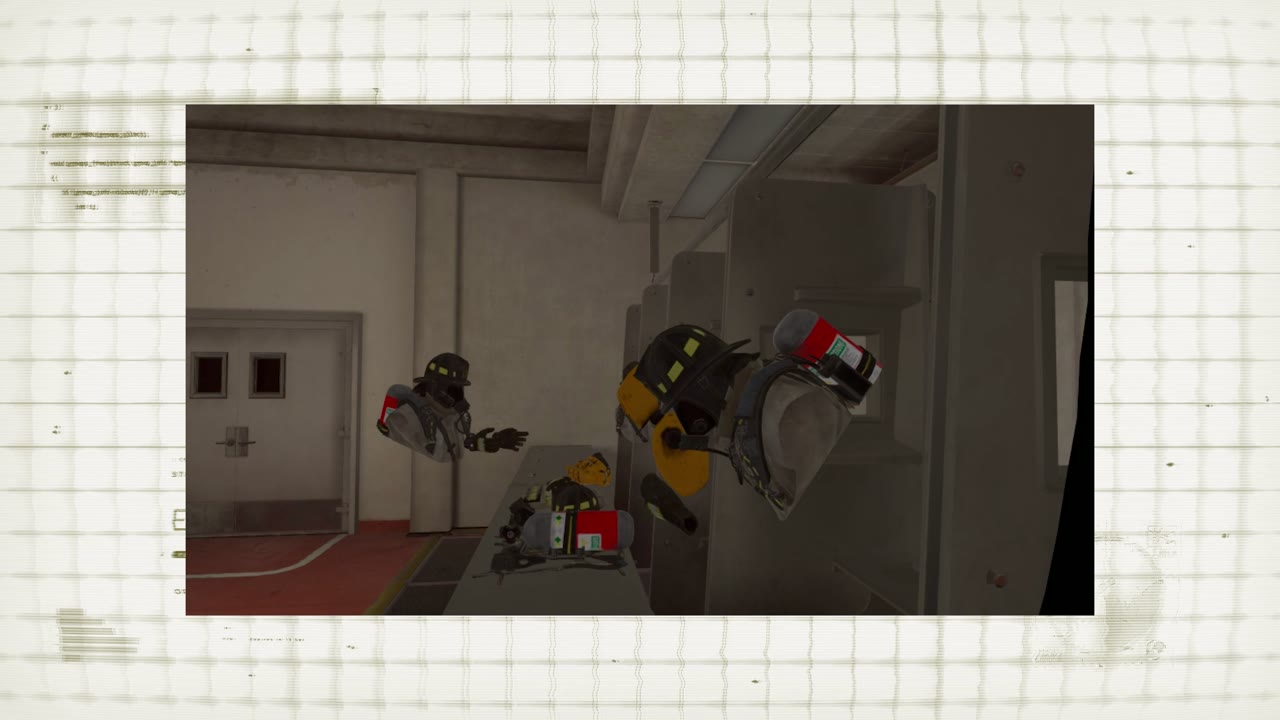
I prototyped VR interactions. The one that stuck was Jaws of Life training: grab the tool, pull the trigger, play the animation, reset. I built several Unity APKs to prove that full animation, not physics, was the right call so the student could focus on the rescue instead of fighting a sim.
On quake I delivered dummy player avatars, wrecked cars, and an update to the train/bridge collapse — extra animated parts, blendshapes, and a staging fix because a bridge chunk was sitting in the bus and killing the impact of the fall.
On wildfire I delivered the horse and shed escape, including run-off so the object could disable when it left view, and a set of horse animation passes (idle, panic, head shake, help signal).
On flood I laid out and exported the rescue finale: Blackhawk loop and outro, end-scene timing against VO and SFX, gurney pacing, and a heavy flood_EndScene.fbx handoff. I asked for trees near the house specifically so I could rig them into the collapse.
I also built an early flashlight shader prototype in Unity — raycast-driven fake light into material instances — to see if the VR read was even plausible.
Constraints that mattered
Quest 3, five players, hand tracking, real props. You do not get to be precious with polycounts or with animation that fights the physical set.
Unity needed named, atlased, blendshaped characters, not pretty Blender files.
The flood end scene was heavy enough that an export took around twenty minutes. Organization was part of the animation.
What I do not claim
I did not build the whole experience, the networking, or every environment. Joy did important fabrication, house, and material work. Other artists and developers owned large parts of fire spread, water, and app stability. I owned survivor/character prep, VR interaction prototypes, and the animation/layout/export on those key mission moments.
Project frames
Production stills